Standing Together with SEND Families

A Council Motion to Support SEND Families
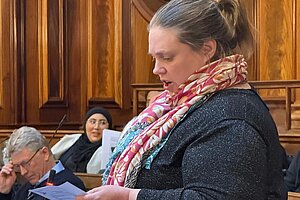
At the Bradford Council meeting in December 2025, Liberal Democrat Councillor Aislin Naylor put forward a motion calling on the city to stand in solidarity with the families of children with Special Educational Needs and Disabilities (SEND).
In introducing the motion, Cllr Naylor emphasised a unifying principle:
“We all come into this chamber not to make enemies but to stand up for what we believe is the right thing to do... one thing I think we can all agree on is that children – especially those with Special Educational Needs – should be given as much support and help as possible to enable them to thrive.”
She spoke from the heart about what she has witnessed as a councillor: insufficient support is having a devastating impact on families and young people. Too often, schools lack the resources to give children the help they need, leading pupils to fall further behind and even lose interest in school. Parents and carers are put in impossible positions – some have had to give up their jobs to educate their children at home when support falls short, leading to financial hardship.
Navigating the SEND system, she noted, is “incredibly stressful for all involved.” The motion “Standing Together with SEND Families” urges the council to affirm that every child has the right to the best start in life and to back up that principle with real action and empathy for those who need it most.
Rejecting Blame and Stigma
Cllr Naylor’s motion comes in direct response to a series of disturbing comments by national figures that have stigmatised families of children with SEND. Richard Tice, deputy leader of Reform UK, sparked outrage by claiming that the SEND system is “being hijacked by parents who are abusing the system” and that some children receive support “who don’t need it.” He even alleged that parents use home-to-school transport as “free taxi transport for their children,” painting the situation as “a major crisis”.
These headline-chasing accusations, essentially suggesting that families seek diagnoses or transport for an easy ride are not only grossly misleading, but they are also deeply hurtful.
In reality, official evidence flatly contradicts Mr. Tice’s narrative: recent National Audit Office reports have found rising demand, legal duties on councils, and severe financial pressures behind the growth in SEND services, not fraud or “abuse” by parents. Families in our community reacted to Tice’s remarks with upset, anger and distress. They feel, rightly, that they are being blamed for problems outside their control.
It’s not just one politician, unfortunately. Kemi Badenoch, a prominent Conservative MP, was recently criticised for endorsing a campaign pamphlet suggesting that autistic people receive “better treatment” and “economic privileges and protections.” The pamphlet implied that diagnoses like anxiety or autism led to unfair perks, stating that children “may well get better equipment or transport to and from home” because of their condition.
This viewpoint, framing essential support such as specialised equipment or school transport as undeserved advantages, is incredibly harmful. It dismisses the very real challenges disabled children face and turns necessary accommodations into something to be resented. Families in Bradford and beyond know that things like an Education, Health and Care Plan (EHCP) or a taxi to school are not some kind of luxury or “badge of honour” – they are often a last resort for those desperate to get their child an education suited to their needs. No parent fights through the daunting EHCP process for fun or prestige; they do it so their child can have a chance to thrive.
Even figures in the current government have added to this dangerous narrative. Wes Streeting, the Labour Secretary of State for Health and Social Care, announced an inquiry into the supposed “overdiagnosis” of conditions like Attention Deficit Hyperactivity Disorder (ADHD), autism, and other mental health issues. The way he floated this idea in the media left many parents and experts alarmed. It seemed to suggest that too many children are being identified with these conditions, feeding into the notion that perhaps families or doctors are too quick to label children.
Comments like these, whether from Mr Tice, Ms Badenoch, or Mr Streeting, all send a toxic message to the public. They insinuate that parents of children with SEND are gaming the system or that children’s needs are exaggerated.
Cllr Naylor, in her speech, firmly rejected these insinuations:
“I don’t believe there is any room for these sorts of unhelpful and damaging comments. Our world is challenging enough for many kids. We live in a fast-paced, loud society that can overwhelm anyone. Imagine adding sensory overload into the mix, where a simple classroom noise can cause pain or panic. The last thing these families need is public figures blaming or ridiculing them”.
Bradford’s Liberal Democrats are making it clear: we reject attempts to stigmatise families of children with SEND, and we stand with them, not against them.
The Real Challenges SEND Families Face
If not “parental abuse of the system,” then what is going on with SEND services?
The reality on the ground is very different from the myths peddled by some commentators. Across the country and here in Bradford, families of children with SEND are struggling not because they seek undue advantage, but because the system is under incredible strain.
According to the National Audit Office, despite significant increases in funding, “the system is still not delivering better outcomes for children and young people,” and many local authorities are facing unsustainable deficits trying to meet the level of need.
In fact, Bradford Council’s own report notes that local authorities everywhere are “struggling to meet demand for additional support needed by some pupils” The number of school-aged children here in Bradford with an EHCP. This document formally states that a child’s needs and support have shot up by 50% since early 2022. This is a staggering rise in just a few years, reflecting how many more children are being identified as needing help.
The council currently faces a shortfall of over 330 specialist school places in our district, which has real consequences: classrooms are overcrowded, children are being sent to schools many miles from home, and more pupils end up in costly private placements because local schools have no space.
Ask any parent of a child with SEND about their experience, and you will hear stories of fight and frustration, not freebies. Securing an EHCP for a child can take months of assessments, paperwork, and often appeals or tribunals. Families describe this process as exhausting and fundamentally unfair, because they have to battle every step of the way to get support that is theirs by right.
One recent analysis highlighted that when parents do challenge council decisions at tribunal, they win in the overwhelming majority of cases – around 95–98% of the time.
That staggering figure shows that far from “abusing” the system, most families have legitimate needs that were not met until they fought for them. As one mother put it bluntly when responding to Mr Tice’s comments: “I don’t know anyone who would go through this just for fun.”
No parent embarks on this journey lightly. They do it because they have to, because without that official plan or that transport to a distant specialist school, their child might not be able to cope or even attend school at all. It’s telling that the National Audit Office calls transport for SEND students an “invaluable service” and warns that without it, many children “may struggle to access or continue with their education.” Moreover, when transport or other support is cut, often “parents may have to adjust working patterns or give up work altogether to take their children to school.”
These are the everyday realities: children travelling hours to school, parents forced to become full-time caregivers or taxi drivers, families feeling “blamed or broken” by a system that makes them fight for every inch. Far from living a life of convenience, SEND families are frequently stretched to their limits. They deserve understanding and help, not suspicion.
Cllr Naylor highlighted one harrowing example of how out of touch the stigma is: some children with sensory sensitivities wear ear defenders (noise-cancelling headphones) in class so they can tolerate the environment. Richard Tice mocked this, calling it “insane”.
But for those children, that small accommodation can make the difference between learning in a classroom and having a meltdown from sensory overload. This is the kind of simple support that enables inclusion, not an indulgence, but a necessity.
As Cllr Naylor said, today’s world is “faster paced, louder, more visually dynamic” than ever, and many of us feel overwhelmed by it at times. For neurodivergent children (for example, those on the autism spectrum or with ADHD), that overwhelm can be disabling. We should respond with empathy and practical adjustments, not ridicule.
The bottom line is this: our SEND system is under pressure because more children need help, and our society is finally beginning to identify and support them, which is a positive development, but one that requires proper funding and planning. What we are seeing in Bradford, surging demand for special school places, budget crises, and long travel distances, is happening across the country. The answer is not to scapegoat families or to lock the gates; the answer is to fix the system so that it works for everyone.

A Fairer Approach to SEND Support
The Liberal Democrats believe that supporting children with special needs and their families is not just an obligation but a moral imperative. We are campaigning for a fairer, more compassionate SEND system. One that helps every child thrive without pitting parents against providers. In Bradford, Cllr Naylor’s motion lays out our local commitment. It calls on the Council to make three things crystal clear:
- Every child and young person has the right to the best possible start in life. This is a fundamental value we will never compromise on. Disability or additional needs should never mean a child is left behind.
- Children with SEND and their families must receive timely, transparent and joined-up support across education, health and care. That includes access to home-to-school transport wherever it’s needed for a child to attend the right school. We owe it to families to make the system easier to navigate – no more endless waiting, opaque decisions or siloed services.
- We reject all attempts to stigmatise families of children with SEND, and we stand in solidarity with them. Blame and shame have no place in this conversation. Instead, we pledge to listen to families, respect their expertise about their own children, and work alongside them to improve support.
It’s about changing the tone from suspicion to solidarity, saying loud and clear that we see you, we hear you, and we will fight your corner. Liberal Democrat councillors will be holding the Council’s leadership to these commitments every step of the way. In practical terms, this means pushing for better local services and sufficient funding.
We’re pleased to note that Bradford Council is moving in the right direction on one urgent issue: special school capacity. The Executive is set to approve over £22 million to create an extra 450 special educational needs places in the district.
We applaud this investment; it’s precisely the kind of action needed to tackle the shortfall and reduce those long journeys for children. New specialist placements, along with more training and resources in mainstream schools, will make a real difference if implemented well. We will make sure this expansion stays on track and delivers for the families who need it.
Nationally, the Liberal Democrats are leading the charge for a better deal on SEND. Our party has put forward detailed proposals, developed with input from parents, teachers, and experts, to end the crisis in SEND support. We have called for a new National SEND Authority to oversee funding for the highest-cost support and end the postcode lottery in provision.
We’re demanding extra funding for local councils so that schools aren’t forced to shoulder costs they can’t afford, and no child is left waiting for help. We know that inclusion in mainstream education is vital for many children, so we’ve insisted on proper training for all teachers and school staff to understand and meet the needs of children with special educational needs, and for every school to have a qualified special educational needs coordinator on its leadership team.
At the same time, we recognise that some children will thrive best in specialist settings, which is why we have pressed the Government to speed up the building of new special schools and cut the red tape that stops local authorities from opening their own when they know it’s needed.
Our party leader, Sir Ed Davey, has made it clear that any national reform must strengthen, not weaken, families' rights. When a petition to protect the legal rights to assessment and support gained over 120,000 signatures, he warned ministers this is the “last chance saloon” to get SEND reform right – “get this wrong and you’re out”, he told them bluntly.
Liberal Democrats will not accept any backsliding on the hard-won entitlements that parents and children currently have. Instead, we want to build on those rights, making the system faster, fairer and adequately funded so parents no longer have to wage war to get support.
All of these policies come down to a simple principle: empathy and fairness. Families of children with disabilities deserve the same care and consideration that any of us would want if our own child were struggling. They should be able to ask for help without fear of judgment. They should receive support without having to battle bureaucracies for it. And above all, their children should be valued and included in our society, not seen as a burden or, as some would have it, part of a “problem.”
Join Us in Standing with SEND Families
This is a cause that transcends party politics. We invite everyone in Bradford and beyond to stand with SEND families. What does that mean? First and foremost, it means pushing back against the toxic narrative that has taken hold in some quarters. If you hear someone suggest that parents are “milking” the system or that children’s needs are exaggerated, speak up and correct them.
The facts and the lived experiences tell a very different story – share those stories and facts. It means listening to families in our community who have children with SEND, believing them, and showing compassion. A little understanding can go a long way; no one expects those outside the system to have all the answers, but basic empathy is powerful.
Standing together also means holding our leaders to account. We urge you to support initiatives that improve SEND support, and to question those that might undermine it. When politicians make flippant remarks that blame families, let them know that we, as a community, won’t tolerate the scapegoating of the vulnerable. There is a saying: “A society is judged by how it treats its most vulnerable.” By that measure, we have work to do – but we also have a tremendous opportunity to do better right now.
We can show that a local council can be compassionate and put aside party differences to affirm the dignity of every child. We can show that Bradford stands up for those who need support, rather than tearing them down. If you believe in empathy, care, fairness and inclusion, the values at the heart of the Liberal Democrats’ campaigning, we ask you to lend your voice. Talk to your councillors, talk to your MP, share your own story if you have one, and demand that SEND families get the fair deal they deserve.
Together, we can change the conversation around special needs from one of blame to one of solidarity. Together, we can push for the practical changes that will ensure no child in Bradford (or anywhere in the UK) is left without the support they require.
Let’s stand with SEND families – not just in words, but in actions – and help build a future where every child can reach their potential without having to fight prejudice or bureaucracy to do so. The Liberal Democrats are committed to this fight, and we hope you will join us. Because when we stand with SEND families, we stand up for a kinder, fairer, and truly inclusive society for all.
Sources:
- Bradford Council motion “Standing Together with SEND Families” (Cllr Aislin Naylor), Council meeting 9 Dec 2025.
- Battersea House education blog on Richard Tice’s SEND remarks and parent responses blog.batterseahouse.co.uk.
- The Guardian – Kemi Badenoch pamphlet controversy, quotes on autism “privileges”theguardian.com.
- The Guardian – John Harris column on “overdiagnosis” debate, referencing Tice’s “ear defenders… insane” comment, theguardian.com.
- National Audit Office – Support for children and young people with special educational needs (Oct 2024), concluding system “not delivering better outcomes”nao.org.uk.
- National Audit Office – Home to school transport report (Oct 2025), noting the importance of transport and the impact of cuts on parents (giving up work), nao.org.uk.
- BBC News (25 Nov 2025) – Bradford Council set to approve 450 special needs places, detailing 50% rise in EHCPs since 2022 and 330-place shortfallfeeds.bbci.co.ukfeeds.bbci.co.uk.
- Liberal Democrats Spring Conference 2025 policy motion “Ending the Crisis: A Fair Deal for Children with SEND” – proposals for funding, teacher training, and new special schools libdems.org.uklibdems.org.uklibdems.org.uk.
- The Independent (15 Sep 2025) – Ed Davey and Munira Wilson on protecting SEND legal rights and a warning to the government, the-independent.com.